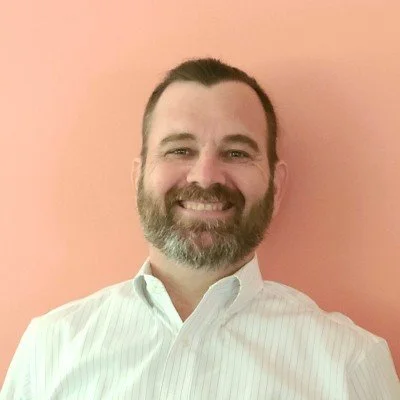
Stephen Kellogg
Position: A fractional CIO/CTO, founder of Bluehelmtech, and co-founder of Lehua AI
The Myth of the Safe Paycheck and the "Business Octopus"
Many people grow up believing that landing a full-time corporate job means you are finally safe. You get a steady paycheck, benefits, and a clear role. Stephen Kellogg believed that too—until life proved otherwise. Based in North Carolina, Stephen calls himself a business octopus because his work stretches across many areas of technology and leadership. Today, he serves as a fractional chief information officer and chief technology officer through his company, Bluehelmtech, and co-founded an artificial intelligence readiness company called Lehua AI.
Stephen’s journey into technology started early in a high school computer lab and continued during four years of service in the Coast Guard, where he bought his first personal computer and fell in love with how technology connects the world. After earning his degree in computer information systems, he spent decades building networks, writing software, moving businesses to the cloud, and even deploying to Afghanistan to build software systems that supported soldiers in the field. Yet despite all his hard work and loyalty, he experienced the painful shock of sudden corporate restructuring. Companies changed direction, eliminated roles, or sold off divisions without rewarding the people who helped build them. Those moments taught him a life-changing truth: corporate job security is often an illusion. True stability does not come from a single employer; it comes from owning your skills, understanding how businesses actually work, and creating real value wherever you go.
Becoming a Trusted Advisor Instead of Just a Tech Vendor
When Stephen stepped out on his own to launch his fractional consulting practice, he brought a leadership style shaped by years of listening to real people. Whether he is acting as an internal chief information officer focused on company infrastructure or an external chief technology officer focused on building customer-facing software, his rule is simple: never push technology just for the sake of technology.
Having worked closely with the managed service provider industry—companies that act as outsourced technology departments for small and medium-sized businesses—Stephen saw a major flaw in how many tech leaders operate. Too often, technical experts start a business and try to force every client into the exact same pre-packaged bundle of software tools. They act like salespeople pushing products rather than partners solving problems. Stephen takes the opposite approach. He believes in acting like a trusted advisor with a fiduciary mindset. Before recommending a single piece of software or digital upgrade, he dives deep into the heart of the company to understand how it makes money, how information flows through its teams, and what its people truly need to succeed. When you care more about a client’s growth than your own tool stack, trust follows naturally.
Smart Courage and the Art of Systems Thinking
Taking the leap from a steady job into business ownership takes immense courage, especially when fear of the unknown tries to hold you back. However, Stephen encourages aspiring entrepreneurs and young tech professionals to pair their courage with smart planning. Rather than quitting a job overnight without a safety net, he advises building a clear business plan, growing a professional network, saving a dedicated financial cushion outside of your emergency fund, and testing the waters step by step.
That same thoughtful discipline defines how he mentors the next generation of software developers and digital leaders. In a world where entry-level workers often focus only on coding one tiny feature in isolation, Stephen champions systems thinking and critical thinking. He urges young professionals to look up from their screens and ask how their work affects the customer and the broader business. Even when leading software teams through agile development or Kanban workflows, he refuses to treat methodology as a rigid checklist. Instead, he adapts tools to fit human beings, helping teams work smoothly together to solve real-world problems.
Cutting Through AI Buzzwords and the "Vibe Coding" Trap
Every few years, the technology world falls in love with a shiny new buzzword. Years ago, it was data warehousing; today, it is artificial intelligence. Through his new venture, Lehua AI, Stephen works directly with business leaders who feel pressured to adopt artificial intelligence immediately just to keep up with the crowd. When he looks under the hood of these companies, however, he often finds that they are missing the basic digital foundation needed to support advanced tools. Many small businesses do not need complex artificial intelligence right away—they need clean data systems, reliable reporting, and simple business automation to replace messy, manual spreadsheets.
Stephen also offers a vital warning about the rise of rapid artificial intelligence prototyping, often called vibe coding. While new tools allow almost anyone to generate a working app in minutes, putting an unverified tool straight into daily business operations creates a heavy hidden burden. Someone still has to maintain that software, secure customer data, fix broken features, and adapt when underlying models change. In Stephen’s leadership playbook, artificial intelligence prototyping is a wonderful way to sketch out an idea visually, but true enterprise stability still requires experienced engineers to build a safe, lasting foundation.
Working On the Business to Build a Lasting Legacy
Building a meaningful career or a thriving business is never an effortless shortcut. Even today, Stephen balances daytime client consulting with late nights building out his new company, choosing to invest extra hours now because he believes in the mission. At the same time, he knows that long-term freedom requires learning how to delegate and step back from daily tasks so a leader can work on the business rather than getting trapped working inside it.
Stephen Kellogg’s story is a powerful reminder that technology will always keep changing, and corporate safety nets will always remain fragile. Whether you are a student dreaming of a career in software, an employee wondering what comes next, or a business owner navigating digitalization, your greatest anchor is clarity. Focus on people, master the fundamentals of how businesses create value, and let technology serve a real human purpose. When you build on solid ground, you never have to fear the next wave of change.
Author: Jovilyn Abella

At ISU Corp, we specialize in custom software development and Ai integration, helping enterprises streamline operations and drive innovation. Trusted by industry leaders, we deliver scalable, high-performing solutions tailored to your business needs.
Explore how we can help: Learn More at ISUCorp.ca

“I used to think that the full-time gig was like a solid you’re set. And I I’ve hit too many times and seen too many other people where that just is not the case. they love you until they don’t need you.”