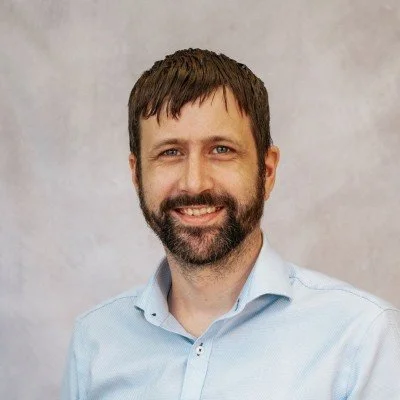
Jerod Venema
Every great technology shift feels inevitable in hindsight, but in reality, it is built by individuals who see a vacuum where others see a crowded room. In this executive series, we break down an intimate, deeply raw conversation from the Leaders in Tech podcast between host David Mansilla and real-time communications pioneer Jerod Venema. What unfolds is not just a standard technical roadmap, but a masterclass in technology-driven perseverance, strategic bootstrapping, and emotional intelligence.
Jerod Venema’s story is a compelling blueprint for the modern builder—demonstrating how a native Canadian engineer moved down to the American South, navigated intense entrepreneurial waters alongside his own brother, and built a global infrastructure powerhouse without ever surrendering his autonomy to predatory institutional capital.
Jerod Venema — Founder & President, LiveSwitch Jerod Venema is the founder of LiveSwitch, a leading provider of solutions that power high-quality, mass-scale interactive video for Fortune 500 companies and small businesses across the world. A pioneer in the development of real-time communications solutions, Venema founded LiveSwitch in 2008 and is widely considered a webRTC and live streaming expert.
His team has developed cutting-edge technologies that have propelled startups to become multi-million dollar enterprises and delivered significant platforms for some of the largest companies in the world, from Adobe to Lockheed Martin. Venema’s work has been featured in publications such as Inc. magazine, InformationWeek, VentureBeat, and the Financial Post.
The Code of Luck — Seizing the WebRTC Revolution
The tech ecosystem is littered with the graves of brilliant architectures that arrived either six months too early or three months too late. In the early days of real-time web infrastructure, connecting native desktop environments and mobile applications directly to a browser required cumbersome native plugins and heavy software downloads. Then came 2012, and with it, Google and Firefox’s historic announcement of WebRTC—a open-source protocol designed to embed interactive audio and video natively inside internet browsers.
For Jerod Venema and his team at LiveSwitch (then operating as Frozen Mountain), this was the moment lightning struck. Literally one month prior, they had independently launched their own custom video streaming framework. Instead of digging in their heels to fight an impending browser standard, they instantly audited the open-source specifications. Recognizing a symmetry in design, they pivoted within a matter of weeks to release the world’s very first WebRTC Software Development Kit (SDK) providing native support for iOS, Windows, and Mac.
If an organization wanted an iPhone app's video feed to appear instantly and flawlessly inside a desktop Google Chrome browser without any downloads, LiveSwitch owned the only stack on earth capable of doing it. Host David Mansilla characterizes this as a divine alignment or blessing, but Jerod looks at it through a lens of engineered probability. True entrepreneurs do not sit around waiting for a lucky break; they put themselves in the crosshairs of opportunity so frequently that catching lightning becomes a statistical certainty.
"A good friend of mine says you got to put yourself in the right place. So, if you put yourself in the right place over and over again, at some point, that luck hits... You work hard enough, you push, put yourself in the right place enough times, eventually you get it right."— Jerod Venema
Technology’s True Value
As technical leaders, it is painfully easy to fall into the trap of fetishizing tech for tech's sake. Code bases, minimal latency, and high concurrent loads provide a certain intellectual high. LiveSwitch boasts an engineering pedigree that stretches into the stratosphere—quite literally. From managing real-time video architectures used to project tens of thousands of fans onto stadium jumbotrons via simple QR codes at the Super Bowl and Adele concerts, to writing native software chosen by NASA and deployed onto the International Space Station, the scale is undeniably mesmerizing.
Yet, the emotional weight of Jerod’s mission lies on the exact opposite end of the spectrum: the small business owner. LiveSwitch is explicitly split into two strategic divisions. While LiveSwitch Build scales enterprise-grade infrastructure for global conglomerates, their application division focuses heavily on home service professionals—painters, plumbers, electricians, and independent contractors.
The emotional core of this technology is human optimization. By enabling a local home service business to execute preliminary diagnostic assessments via ultra-reliable, zero-friction video feeds directly from their office, LiveSwitch eliminates seven hours of daily windshield time. It transitions technology away from a tool that purely enriches tech billionaires, turning it instead into an engine of local economic preservation. The true validation of a platform isn't found in its architectural complexity; it is found when a working-class parent gets to sit down at the dinner table with their children at a reasonable hour because real-time communication bought them their time back.
Redefining Entrepreneurial Devastation
The macroeconomic landscape loves to glorify massive, venture-capital-backed capital raises. Yet, both Mansilla and Venema reflect deeply on the spectacular, multi-hundred-million-dollar tech collapses that vanish without a trace—citing the structural collapses of entities like WeWork and the fraudulent architecture of FTX as symptoms of a predatory system. When tech leaders use other people's money as a playground, they lose their connection to actual financial gravity.
Bootstrapping a company from infancy in 2008 required Jerod to lean on family capital. That reality introduced an agonizing, crushing psychological weight. Operating under a "12 out of 10" stress level, every waking hour was governed by a profound moral imperative: the money borrowed from an uncle or a father had to be protected and repaid at all costs. This environment cultivates a distinct breed of resilience—a refusal to give up that cleanly separates authentic entrepreneurs from corporate opportunists.
In Jerod's framework, mistakes are merely transactional costs paid to the school of experience. He boasts of having "mistakes coming out of his ears," yet categorically maintains that he has never once failed. Why? Because failure is not an external event dictated by a bad quarter, a missing feature, or a dry pipeline. Failure is a conscious internal decision. It only becomes real the moment you choose to stop trying.
"I’ve made tons of mistakes. I got mistakes coming out my ears... But to me, failing is when I give up. And I’ve never given up. So, I can safely say that at least for my definition anyway, failing has not happened."— Jerod Venema
The Brotherly Dichotomy and the Unilateral Veto
No monumental technology enterprise is built by a solo genius operating in isolation. Great organizations require an intentional, often friction-filled alignment of complementary forces. For over a decade, the foundational engine of LiveSwitch was a raw brotherly partnership between Jerod and his co-founder, Anton. Their operational dynamic mirrored the classic entrepreneurial templates: Steve Jobs and Steve Wozniak, Bill Gates and Paul Allen. One brother locked his eyes entirely on product development and architectural excellence; the other took complete ownership over market strategy, operations, and sales execution.
This level of extreme proximity breeds legendary conflict. Jerod recalls "knockdown, drag-out fights"—moments of pure, unadulterated executive exhaustion where one would scream into the phone, slam it down in rage, only for the other to call back minutes later with a humbled, "My bad, I didn't mean to get that heated." What kept the ship steady was an unbreakable, unwritten law: they were fiercely fighting about how to reach the summit, but neither was ever going to abandon the mountain.
To safeguard their organizational culture amid this operational heat, they instituted an extraordinary talent acquisition framework: The Unilateral Veto Power. In a highly saturated tech hiring market, either brother could completely block a candidate from entering the company at any level—with zero explanation required. If a candidate displayed stellar engineering metrics but triggered a negative visceral intuition or an cultural red flag for just one brother, the conversation ended immediately. This unyielding standard shielded their team from toxic leadership placements, which Jerod warns can cause long-term, devastating residual damage to team confidence and collective output for years after the bad actor is excised.
Shattering the Founder’s Ceiling
The very same qualities that enable an organic tech founder to survive the early lean years—the relentless personal hustle, the obsessive micromanagement, the instinct to carry the entire weight of the company on one's own back—eventually morph into the ultimate ceiling to corporate growth. This is the paradoxical wall of the self-made entrepreneur. LiveSwitch successfully bootstrapped its way past the two-person phase, scaled past fifteen, and eventually marched up to an organizational capacity line of approximately 50 employees. And there, it hit a brick wall.
Jerod encountered a profound realization that requires a rare brand of executive humility: he was taking on too much stress, absorbing too much work, and blocking his own company's scale by acting as its central bottleneck. In a moment of absolute vulnerability, he engaged with his mentor, openly questioning his own effectiveness as a CEO. The mentor's response was a swift, liberating "Good." Because acknowledging your personal limitations is the foundational step toward transcending them.
"Step one is acknowledge that you're not good at it, because then you can at least address it... A lot of times also it's not just about what you can do. It's about what you're best at. Sometimes people are just better at something else. That's totally fine."— Jerod Venema
True leadership maturity means stepping out of the spotlight to let the entity grow. Jerod broke through his capacity ceiling by establishing a transformative, grassroots partnership with veteran entrepreneur Brian Hamilton, fundamentally restructuring the business's equity and operation. Today, while others manage the corporate machine, Jerod has intentionally shifted his day-to-day focus back to his pure zone of genius: pioneering new products and driving raw video innovation.
To build an enduring, multi-million-dollar technology enterprise, you must ultimately be willing to kill your own ego. You must transition your team from passive employees into active, impassioned owners who run at the same level of intensity as the founders. The final message of Jerod's journey is a powerful, emotional reminder for tech leaders everywhere: True success is never achieved alone. It requires an entire village—supportive spouses, patient families, and dedicated teams—holding up the pedestal to ensure that the vision survives, scales, and ultimately changes the world.
Author: Jovilyn Dela Cruz

At ISU Corp, we specialize in custom software development and Ai integration, helping enterprises streamline operations and drive innovation. Trusted by industry leaders, we deliver scalable, high-performing solutions tailored to your business needs.
Explore how we can help: Learn More at ISUCorp.ca

“I’ve made tons of mistakes. I got mistakes coming out my ears... But to me, failing is when I give up. And I’ve never given up. So, I can safely say that at least for my definition anyway, failing has not happened.”