What 40 Years in Tech Taught Abhay Salpekar About Staying Unstoppable
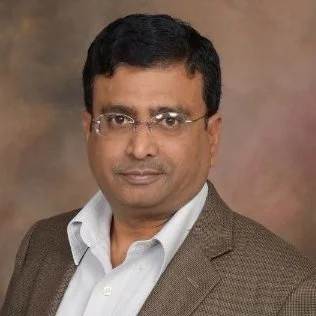
Abhay Salpekar
Position: SVP, Engg. & CPIO at DEEPNURAL.AI
The Foundations That Hold Us Up
In a world where technology moves faster than we can type, it is easy to feel overwhelmed by how quickly things change. New software pops up overnight, artificial intelligence is reshaping how we work, and the digital tools we rely on today might be completely different tomorrow. But when you look past the rapid changes, you realize that true success isn't about chasing every new trend. It is about building a foundation strong enough to withstand any shift.
This fundamental truth was at the heart of a recent episode of the Leaders in Tech Podcast, hosted by David Mansilla, featuring guest Abhay Salpekar.
Abhay is a seasoned strategic technology and AI executive leading cutting-edge engineering, AI product development, and enterprise digital transformation. He has a proven track record aligning technology strategy with business objectives to drive innovation, operational efficiency, and revenue growth across startups, PE-backed companies, and multibillion-dollar enterprises.
When Abhay started his journey back in the mid-1980s, the digital world looked completely different. He graduated as an electrical engineer during a time when computer science was still finding its footing and no one knew for sure where the industry was headed. Instead of following a predictable path, curiosity guided him into the world of early computing. By focusing deeply on core principles—how systems process logic, how hardware connects to software, and how complex problems can be broken down—he built a mindset that could adapt to anything.
Through decades of technological revolutions, from early mainframe systems to the rise of the internet, Abhay discovered that tools and programming languages come and go, but strong fundamentals never go out of style. It is like constructing a skyscraper: the architectural style or the height of the building can change, but if the foundation is weak, the structure will eventually crumble.
For students entering tech today or professionals trying to navigate their next career step, this perspective is deeply comforting. You don’t need to master every single tool that hits the market. Instead, focus on understanding the core principles behind how things work, stay curious, and let your foundational knowledge give you the confidence to stand tall through any industry shift.
The Art of Knowing When to Pivot
Growth in our personal lives and careers rarely follows a straight, smooth line. Instead, it moves in cycles. We start something new, work hard to master it, reach a point of comfort, and then—if we aren't careful—risk standing still while the world moves past us. Learning how to recognize these moments and take the next step is one of the most important skills any leader can develop.
In his current role as Chief Product and Innovation Officer at Deep Mirror, Abhay Salpekar sees this continuous evolution firsthand every day. Deep Mirror isn't just riding the wave of new technology; they are actively building the future of digital defense. Abhay's job is to look at where technology is today and anticipate where it will land tomorrow, ensuring that products and teams remain relevant in an environment that never stops shifting.
Throughout his career journey, Abhay has observed what happens when individuals or companies get too attached to a single skill or product. Decades ago, developers spent years mastering specialized memory limits and specific coding languages, only to watch those skills become obsolete when hardware evolved. The lesson was clear: holding on too tight to the past can hold you back from your future.
Abhay calls this idea the Skills Life Cycle. Just like a product hits the market, matures, and eventually gets replaced by something better, our personal skill sets go through the exact same process. True professional growth requires us to anticipate when a cycle is coming to an end so we can gracefully pivot to the next level before we get left behind.
Pivoting takes real courage. It means stepping out of your comfort zone, leaving behind what made you successful yesterday, and embracing the humbling process of learning something new. But when you treat change as an opportunity rather than a threat, you open the door to endless personal and professional growth.
Securing the Future of Artificial Intelligence
As artificial intelligence transforms from a futuristic concept into an everyday reality, our world is becoming more connected than ever before. AI models are helping businesses automate operations, analyze massive amounts of data, and make real-time decisions. But as these smart systems take on more responsibilities, they also introduce complex security challenges that traditional digital defenses were never designed to handle.
This is precisely where Abhay Salpekar and his team at Deep Mirror are making their mark. Rather than using AI merely as a buzzword, they are focused on building practical, forward-thinking cybersecurity solutions. They are transforming traditional security systems into adaptive, autonomous defense meshes that learn from context and protect complex digital environments.
One of the most fascinating challenges Abhay's team addresses is securing independent AI agents. In today's digital environment, AI agents aren't just reading text—they are making decisions, calling external applications, and taking action on behalf of human users. Without proper safeguards, these agents can become vulnerable to risks like prompt injections or unauthorized access.
To solve this, Deep Mirror is implementing smart, identity-focused solutions. They are essentially giving digital agents their own unique cryptographic identities—a digital passport of sorts. This ensures that every agent can prove who it is, operate securely, and access only the specific data and tools it is authorized to use.
Behind all this complex engineering is a deeply human objective: building trust. As technology takes on a bigger role in our everyday lives, people need to feel confident that the systems running in the background are safe, ethical, and secure. Leadership in this area isn't just about writing efficient code; it's about protecting the digital spaces where human beings connect, create, and build their futures.
Looking Ahead to the Quantum Horizon
If artificial intelligence represents the wave of change we are currently riding, quantum computing is the massive tide rising on the horizon. Today's digital world relies on traditional binary processing—calculating information through simple zeroes and ones. But quantum computing introduces infinite states in between, promising compute power capable of solving problems in seconds that would take traditional computers thousands of years.
While many leaders are focused entirely on today's AI landscape, Abhay Salpekar's visionary approach to product strategy keeps an eye on what lies five to ten years ahead. He understands that while quantum technology is still evolving, its ability to crack traditional cryptographic encryption will eventually disrupt entire industries, from global finance to digital security.
Preparing for a future that hasn't fully arrived yet requires a unique balance of discipline and imagination. At Deep Mirror, Abhay advocates for designing quantum-proof products today, using flexible frameworks that can adapt as hardware advances—such as multi-layer 3D chip designs—continue to expand processing boundaries.
This forward-thinking mindset offers a powerful lesson in personal leadership. It is easy to spend all our energy putting out fires and managing the daily grind. But true leaders make time to look up at the horizon. They ask themselves where their industry is headed, what disruptions are around the corner, and how they can prepare their teams to handle future challenges.
By anticipating change rather than reacting to it at the last minute, you transform fear of the unknown into a strategic advantage. Facing the future with confidence starts with the choices you make to prepare today.
Heart-Led Leadership in an Automated World
With all the talk about artificial intelligence, rapid digitalization, and quantum computing, it is easy to wonder where human beings fit into the future of work. When algorithms can write code and autonomous systems can manage complex operations, what is the real value of human leadership?
The answer lies in the emotional heart of Abhay Salpekar’s career journey. From his early days being rotated through tech support, sales, and engineering, to leading executive product teams today, Abhay's success has never been driven by technology alone. It has been built on empathy, continuous curiosity, and a deep desire to help people grow.
Throughout the podcast, Abhay reflects on how his career path was shaped by unexpected opportunities, mentorship, and a genuine passion for learning. When young professionals ask for advice on how to survive an automated job market, his answer isn't to become a robot or memorize a specific coding language. Instead, he highlights human qualities: curiosity, resilience, strong foundational knowledge, and the courage to accept new challenges.
Leadership isn't about knowing every single answer or controlling every outcome. It is about creating an environment where team members feel supported as they step into new roles, pivot through industry shifts, and solve meaningful problems. Technology is simply a powerful tool in our hands; the real magic comes from human creativity, purpose, and connection.
As we look toward an increasingly digital future, we don't need to fear the speed of change. By keeping our foundations strong, staying curious, and leading with heart, we can build careers and businesses that thrive no matter what the future holds.
Author: Jovilyn Abella

At ISU Corp, we specialize in custom software development and Ai integration, helping enterprises streamline operations and drive innovation. Trusted by industry leaders, we deliver scalable, high-performing solutions tailored to your business needs.
Explore how we can help: Learn More at ISUCorp.ca

“Get your fundamentals clarified and have good strength on that... rest of these waves will keep on forming. Today AI, tomorrow quantum computing, day after tomorrow something else will show up. Things will change, but you would be one of those who can pick up those things fairly quickly.”